Freelance Invoice Excel – Free Template (2026)
7
Free download
Track rent, expenses and tax year totals for UK rental properties with a simple income record and summary sheet.


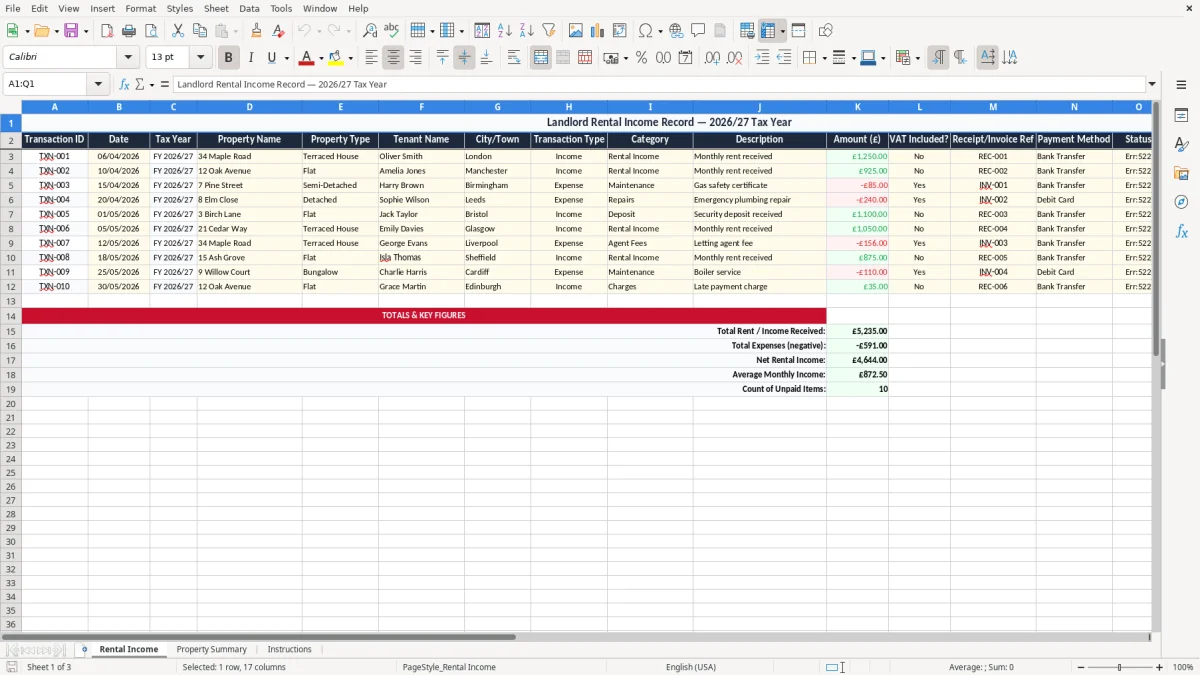
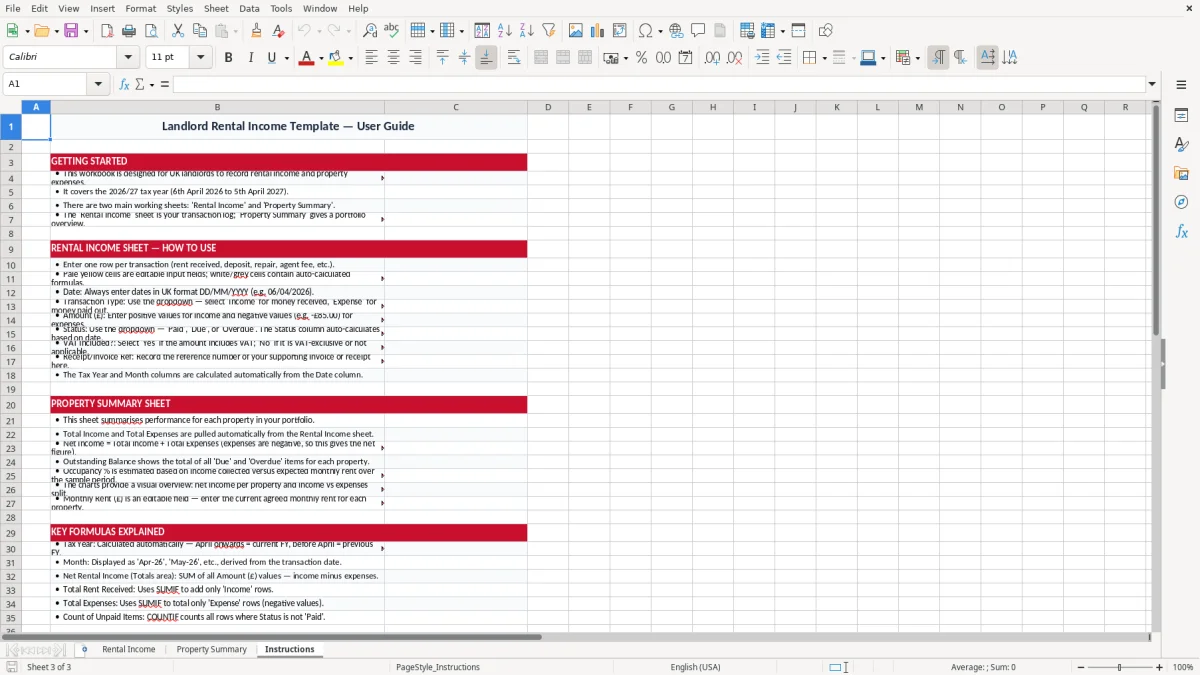
This landlord rental income Excel template tracks rent received, expenses, payment status and property totals for UK rental property records. It includes a Rental Income sheet, a Property Summary sheet and a short Instructions sheet.
Use it to keep a clean record for each tenancy, separate income by property and see what each letting is doing over the tax year. The layout is built for straightforward bookkeeping, not property software.
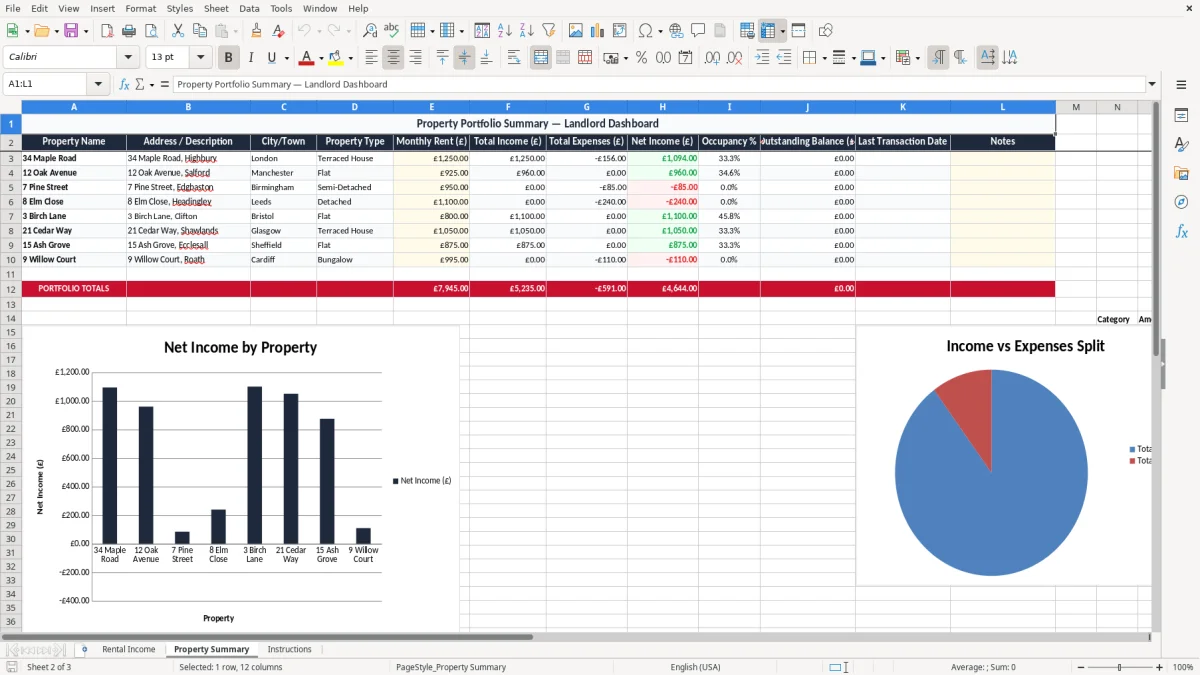
Image 1 shows the Rental Income sheet with columns for transaction ID, date, tax year, property name, tenant, category, amount, VAT included, payment method, status and notes. Image 2 shows the Property Summary sheet, which pulls the totals together for each property.
This template suits a private landlord with one flat, a small limited company with three buy-to-lets, or a lettings bookkeeper handling several tenancies. It is most useful when you need a quick monthly check before a mortgage payment, a tenant arrears chase, or the year-end figures for Self Assessment.
A landlord with two flats might record six rent receipts a month and three repair invoices, then review the totals at month end. A portfolio landlord with 12 properties could be looking at 60 to 80 transactions a month, which is exactly where a single, standard sheet is easier than scattered bank notes and emails.
The Property Summary sheet helps you see which property is pulling its weight. If one house brings in £1,250 a month and another only £725 because of gaps in occupancy, you can spot the problem quickly and compare it against mortgage interest, repairs and void periods.
For UK tax purposes, you need records that support the rental figures you put on your Self Assessment return. The tax year runs from 06/04/2026 to 05/04/2027, and you should keep the paperwork behind the spreadsheet for at least 5 years after the 31 January online filing deadline.
Keep the bank statement, tenancy schedule, invoices and any mileage or repair receipts that explain each line. If you spend £486 on a boiler repair and £120 on electrician labour, that £606 needs to be backed by evidence, not just a memory when the return is due.
A sole trader landlord owns the property personally, while a limited company landlord is registered at Companies House and files year-end accounts as well as corporation tax. If you own one property personally and another through a Ltd company, keep the records separate; mixing them makes the profit and loss figures harder to defend and harder to reconcile.
That separation is also easier to maintain when you track each deductible item in a self assessment expenses sheet rather than trying to untangle mixed records at year end.
The usual mistake is to record only the bank receipt and ignore what it was for. That looks tidy until a £1,250 payment arrives with £150 of arrears and you cannot tell whether the tenant paid late, paid short or paid in advance.
Another common fault is leaving out the receipt or invoice reference, which makes it painful to match a repair bill or chase a missed rent payment. If you have 24 monthly receipts and two of them are entered against the wrong property, your property totals will be wrong by hundreds of pounds and the error may not show until year end.
Landlords also mix up capital improvements and repairs. Replacing a broken tap is usually a repair, but fitting a full new kitchen is a different treatment and belongs in your year-end review, not buried as an ordinary expense.
Best practice is to update the sheet on the same day you review your bank account, not weeks later when the figures are fuzzy. For many landlords, the easiest habit is to do it on the first Monday of the month, straight after checking rent receipts.
If you are managing 20 or more properties, dealing with agent statements and handling regular refurbishments, you may need dedicated property software. Up to that point, this workbook is usually enough for a clear monthly picture without paying for a system you do not yet need.
At that point, a cash flow forecast gives the next layer of visibility for refurbishments, agent fees and other property outgoings.
It tracks rent receipts, expenses, payment status, property names, tenant names, references and notes. The Property Summary sheet then pulls the totals together so you can review each property quickly.
Yes. It gives you a clean record of rental income and related costs that you can use when preparing figures for your Self Assessment return. Keep the supporting bank statements and invoices with it.
Yes. The Rental Income sheet is set up for transaction-level entries, so you can record several properties in the same workbook and separate them by property name and type.
Yes, but keep the company records separate from any personally owned property. A Ltd landlord is registered at Companies House, so its bookkeeping and year-end accounts should stay distinct from your personal records.
Use clear labels such as paid, unpaid or part-paid. That makes it easier to spot arrears and follow up if a tenant has not paid the full amount.
Keep the spreadsheet and supporting documents for at least 5 years after the 31 January filing deadline for the relevant tax year. If the records belong to a limited company, keep them in line with company record-keeping requirements as well.
Excel template by
Guide written by